


Zoga Movement Practice
The Zoga Movement Practice program focuses on understanding six areas of the body. Each day of the training is dedicated to working with a different area. Participants will begin by learning about movement and spatially understanding the anatomy of the entire body. Beginning with the feet, they will explore the possibilities of movement between individual body segments, culminating in balancing movements of the head and neck.
COURSE DESCRIPTION
The Zoga Movement Practice program focuses on understanding six areas of the body. Each day of training is dedicated to working with a different area. Participants will begin by learning about movement and spatially understanding the anatomy of the entire body. Beginning with the feet, they will explore the possibilities of movement between individual body segments, culminating in balancing movements of the head and neck.
Participants will also learn how to identify areas requiring movement intervention and how to implement changes in these areas during classroom activities. Common postural and movement patterns will be analyzed and strategies for influencing these patterns will be developed.
A course for physiotherapists, movement and manual therapists, movement trainers and teachers, yoga and fitness instructors, and students of the above-mentioned fields.
This course is intended for graduates of the Zoga Movement Introduction (Zoga Multidimensional Movement) training.
Instructor
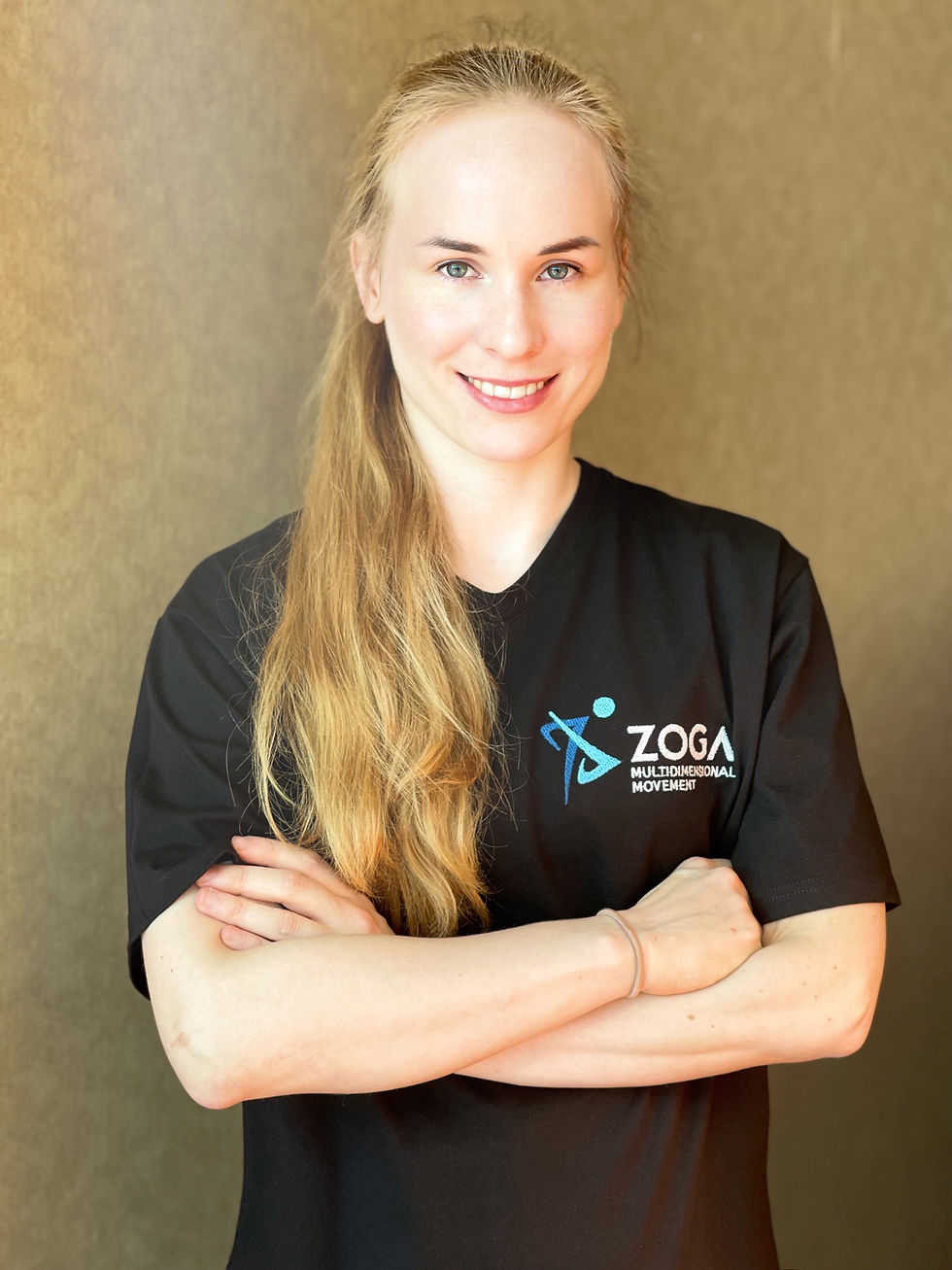
Maja Ludwikowska, MD

PROGRAM
Day I
-
09:00–11:00 Introduction, goals and principles of leading Zoga Practice classes, the role of the instructor. Principles of Structural Integration and the system: 10–12 therapeutic steps; anatomy of the foot, lower leg, thigh, and pelvis
-
11:00–11:15 Break
-
11:15–13:00 Movement sequence for the foot and lower leg. Movement sequence for the thigh – front and back of the thigh in both directions
-
13:00–14:00 Break
-
14:00–15:15 Postural analysis of the foot and lower leg
-
15:15–15:30 Break
-
15:30–16:30 Functional analysis
-
16:30–17:30 Short movement sequence for the foot plus glide directions in tension and compression
Day II
-
09:00–10:00 Anatomy of the thigh and pelvis
-
10:00–11:00 Movement sequence for the pelvis and thigh. Postural analysis and movement analysis
-
11:00–11:15 Break
-
11:15–13:00 Movement analysis sequence and postural analysis
-
13:00–14:00 Break
-
14:00–16:00 Postural and functional analysis of the pelvis
-
15:15–15:30 Break
-
15:30–17:30 Movement sequence for the pelvis and lumbosacral area
Day III
-
09:00–10:30 Anatomy of the abdominal cavity, rib cage, and spinal connections
-
10:30–11:00 Movement sequence for the abdomen and breathing
-
11:00–11:15 Break
-
11:15–13:00 Movement sequence for the ribs
-
13:00–14:00 Break
-
14:00–15:15 Postural analysis of the rib cage and abdominal cavity
-
15:15–15:30 Break
-
15:30–16:30 Functional analysis of the trunk region
-
16:30–17:30 Short movement sequence for the foot plus glide directions in tension and compression
Day IV
-
09:00–11:00 Anatomy of the spine region
-
11:00–11:15 Break
-
11:15–13:00 Movement sequence for the spine region
-
13:00–14:00 Break
-
14:00–15:15 Postural analysis
-
15:15–15:30 Break
-
15:30–16:30 Functional analysis
-
16:30–17:30 Short movement sequence for the spine region
Day V
-
09:00–11:00 Anatomy of the head, neck, and mandible
-
11:00–11:15 Break
-
11:15–13:00 Movement sequence for the head, neck, and mandible
-
13:00–14:00 Break
-
14:00–15:15 Postural analysis
-
15:15–15:30 Break
-
15:30–16:30 Functional analysis
-
16:30–17:00 Short movement sequence for the head, neck, and mandible
Day VI
-
09:00–10:00 Anatomy of the shoulder girdle and upper limbs
-
10:00–10:15 Break
-
10:15–12:00 Movement sequence for the shoulder girdle and upper limbs
-
12:00–13:00 Break
-
13:00–14:00 Postural analysis
-
14:00–14:15 Break
-
14:15–15:00 Movement sequence for the shoulder girdle and upper limbs
The aim of the course is to develop skills in working with movement and the structure of the whole body within the Zoga Movement approach. Participants learn effective strategies for observing posture and movement and how to introduce changes that improve the function and integration of individual body regions. The program is focused on the practical application of knowledge in work with patients and clients.


