


COURSE DESCRIPTION
Discover ScarWork – individual manual work adapted to the type of scar, the time of its formation and the healing method developed by Sharon Wheeler.
Instructor


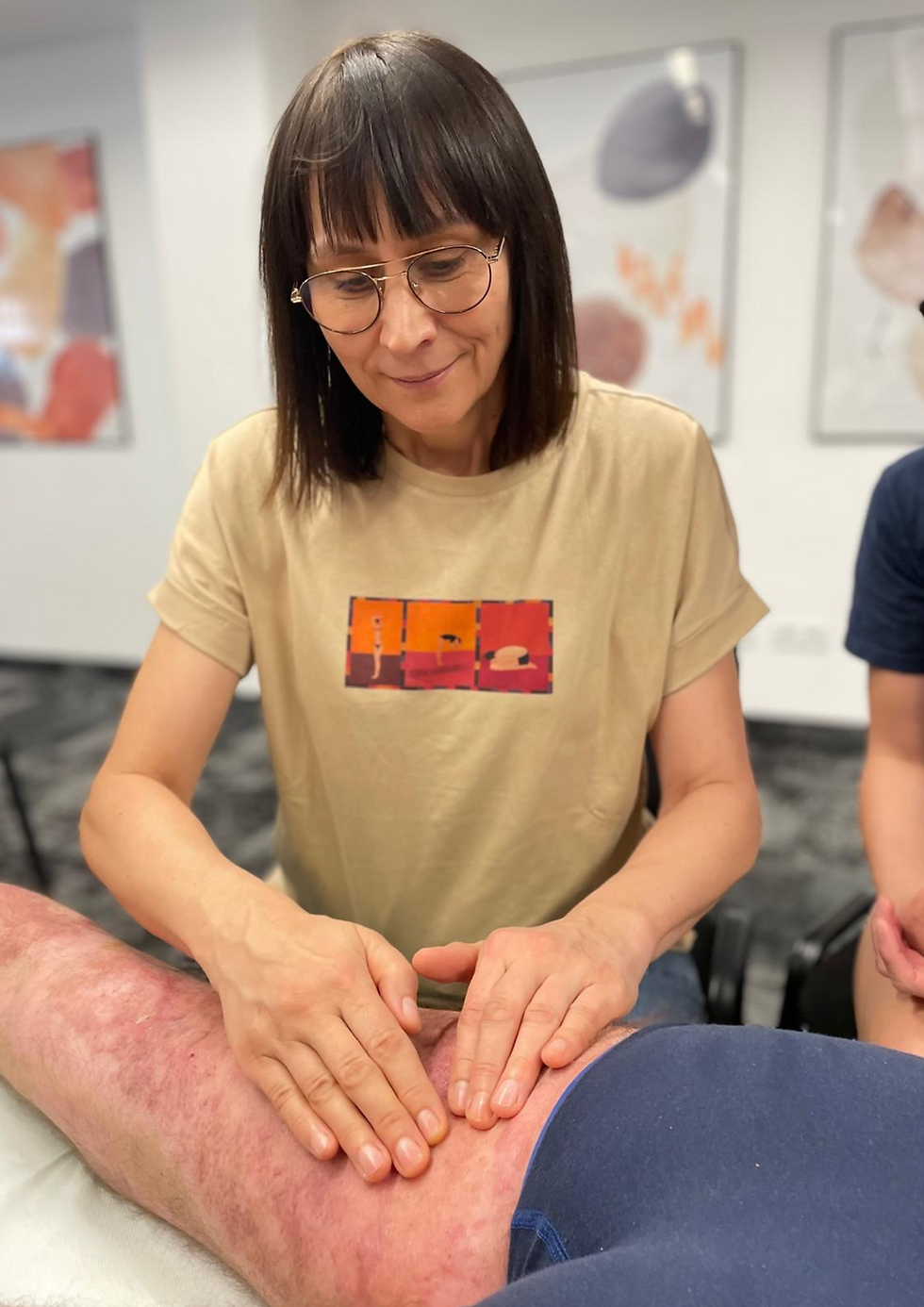
ScarWork, according to the creator of the method, Sharon Wheeler, is the art of integrating scars with the fascial network.
The aim of the training is to examine and treat all types of scars based on the manual techniques of the ScarWork method.
Our 4-day training includes a wealth of hands-on practice, during which you'll learn scar management techniques—first on yourself, and then, in the following days, applying them to your patients. Theoretical lectures cover the latest knowledge on scar formation, treatment, and rehabilitation. This training method allows you to quickly learn about different types of scars and observe their changes during and after treatment.
Advantages of the ScarWork method:
The ScarWork method can be used regardless of the time of scar formation, using appropriate principles and techniques.
This therapy can be used for all types of scars: after surgery, accidents, burns, radiation and others.
By performing scar therapy, we reduce tension within the scar and increase the range of motion between the skin, subcutaneous tissue, fat, fascia, and muscles. This improves the range of joint movement and tissue function in the area surrounding the scar.
The techniques used are painless for patients and easy for therapists to perform and do not burden their hands.
Scarwork therapy helps reduce pain and normalizes superficial sensation, both in hyperesthesia and hypoesthesia.
Under the influence of the techniques performed, the color of the scar changes, and patients after the therapy notice that their scars become softer to the touch and smoother.
The effects of working with scars can be observed after just one treatment, but to ensure long-lasting results it is better to undergo a series of treatments.
Ultrasound examinations show that the tissues subjected to therapy are arranged in a more regular manner, maintaining a layered arrangement.
ScarWork – working method
This method does not use any additional tools, oils, or creams. Approximately 25 techniques are employed. Some of these are used to mobilize superficial tissues, others to mobilize deeper tissues, and some are specifically designed for specific types of scars. One of the principles of this work is to assess the impact of the scar on the entire body, in static and dynamic conditions. Functional tests before and after therapy demonstrate how scar treatment improves function. This method also includes techniques for specific types of scars.
Basic content:
Principles of working with the ScarWork method.
Tips for working with the ScarWork method.
Basic techniques of the ScarWork method.
Techniques complementing the ScarWork method.
Indications and contraindications for performing the ScarWork method.
Supplementary content:
Definition of scar and types of scars.
Stages of wound healing and scar formation.
Risk factors for complicated scars.
Classification of complicated scars.
Objective and subjective methods of examining scars.
Skills:
Study of different types of scars.
Learning the practical execution of all ScarWork techniques.
Practical use of ScarWork techniques in working with patients.
PROGRAM
Day I
1. Welcome, introductory lecture.
2. Presentation of therapy with the patient and its discussion.
3. Basic techniques for working with scars – theory.
4. Basic techniques for working with scars – practice.
5. Summary of the first day of classes.
Day II
1. Basic techniques for working with scars – practice.
2. Presentation of the therapy with the patient and its discussion.
3. Theoretical lecture – complementary techniques for working with scars.
4. Complementary techniques for working with scars – practice.
Day III
1. Complementary techniques for working with scars – practice.
2. Preparation for working with patients, a short review of techniques.
3. Scar therapy – working with patients, discussion.
Day IV
1. Scar therapy – working with patients, discussion
2. Course summary.


